Me-Page Team
Last modified 14 Jul 2026
Article Plan
- Start with One Clear Website Goal
- Understand Who Will Visit Your Website
- Plan Your Website Structure
- Create a Simple Website Map
- Decide What Content You Need
- Plan the User Journey
- Think About Navigation Early
- Plan for Mobile Visitors
- Set Basic SEO Goals
- Choose the Right Website Building Approach
- Use a Pre-Build Checklist
- Conclusion
- Frequently Asked Questions about Planning Your Website
Building a website can feel exciting. You may already be thinking about colors, images, fonts, and clever headlines. But jumping straight into design often creates unnecessary problems later.
Good website planning gives your project direction before you start moving buttons and creating pages. It helps you understand your audience, organize content, and decide what your website should actually achieve.
Whether you're creating a personal page, business site, portfolio, or online project, this website creation guide will help you plan a website with confidence. With a clear strategy and a flexible platform like ME-Page, the building process becomes much easier.

Start with One Clear Website Goal
Before thinking about your website structure, decide why the website exists.
Your primary goal might be to:
- Generate leads
- Sell products
- Promote services
- Showcase creative work
- Build a personal brand
- Grow a community
- Share educational content
For example, a photographer may want visitors to view a portfolio and request a session. A coach might focus on getting consultation bookings.
Choose one main goal first. Secondary goals can support it, but they shouldn't compete for attention.
Understand Who Will Visit Your Website
Effective beginner website planning starts with understanding your audience.
Identify Your Ideal Visitor
Ask simple questions:
- Who are they?
- What do they need?
- What problem are they trying to solve?
- Why would they visit your website?
- What action should they take?
For example, a freelance designer targeting startups needs different content from an artist building a fan community. The audience affects everything from your language to your page layout.

Think About Visitor Questions
Write down the questions a new visitor might have.
A potential client may ask:
- What services do you provide?
- How much does it cost?
- Can I see previous work?
- Why should I trust you?
- How do I contact you?
Your website should answer important questions naturally and quickly.
Plan Your Website Structure
Your website structure is the framework that connects your pages and content.
Don't create pages simply because other websites have them. Every page should serve a purpose.
A basic business website might include:
- Home
- Services
- Pricing
- About
- Portfolio
- Contact
A creator website could include:
- Home
- About Me
- Projects
- Resources
- Shop
- Contact
Sketch your structure on paper or write it in a simple document. You don't need complicated software to plan a website effectively.
Create a Simple Website Map
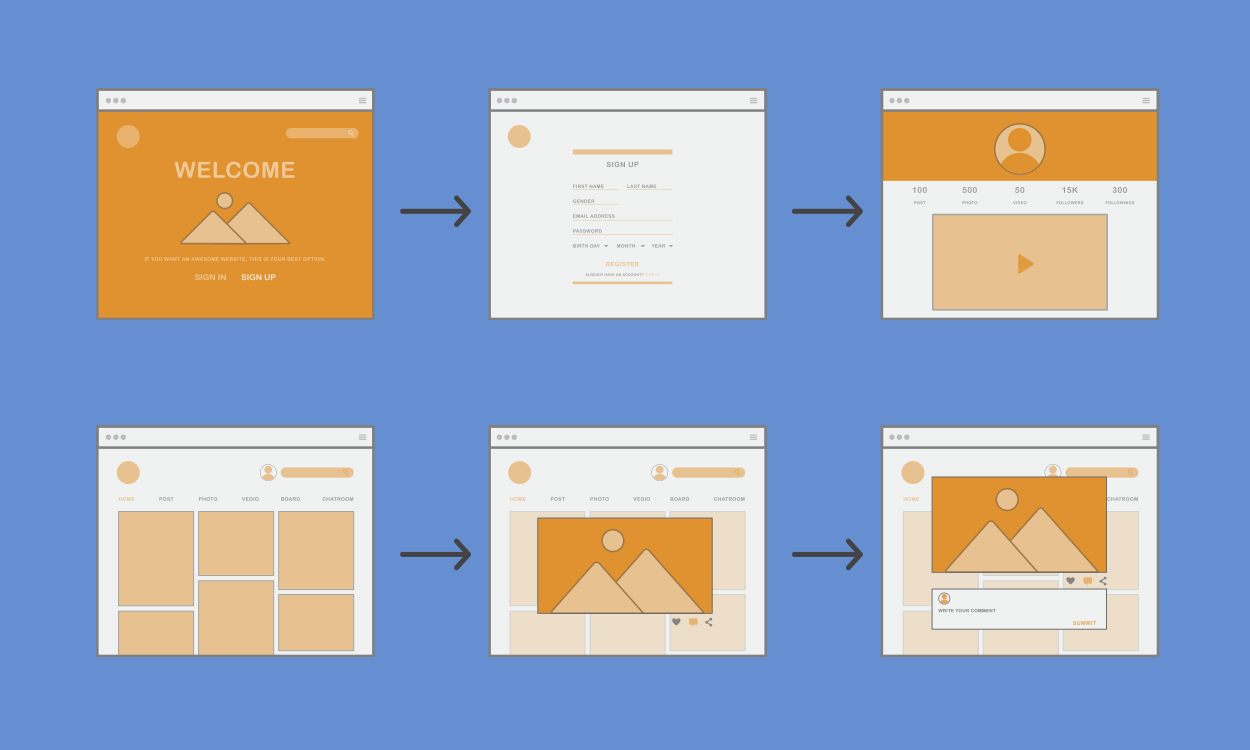
A website map shows how pages connect. For example:
This simple exercise helps identify missing pages and unnecessary content before building begins.
It also makes navigation planning much easier.
Decide What Content You Need
Content often takes longer to prepare than website design. That's why a good website creation guide should always include content planning.
Prepare Your Core Text
Create a list of content you need to write:
- Homepage headline
- Business or personal introduction
- Service descriptions
- Product information
- About story
- Calls-to-action
- Frequently asked questions
You don't need perfect copy immediately. Start with clear ideas and improve the wording later.


Collect Your Visual Assets
Prepare your:
- Logo
- Photos
- Product images
- Portfolio examples
- Videos
- Icons
- Brand graphics
For example, an artist may need high-quality images of recent work. A consultant might prepare a professional portrait and client logos.
Having these materials ready speeds up the building process.
Plan the User Journey
A website isn't just a collection of pages. Visitors move from one section to another based on their needs. Think about the ideal journey.
For example:
Homepage → Services → Pricing → Contact
A creator's journey might look like:
Social Media → Portfolio → About → Newsletter Signup
Good website planning guides visitors toward meaningful actions without making them search for the next step.
Add Clear Calls-to-Action
Decide which actions matter most.
Common examples include:
- Contact Me
- Get a Quote
- Book Now
- View My Work
- Join the Community
- Download the Guide
Use consistent calls-to-action throughout the website. Visitors should always understand what they can do next.
Think About Navigation Early
Navigation becomes much easier when your pages are already planned. Keep the main menu simple and use familiar labels. Avoid vague titles that force visitors to guess what's behind a link.
For example, "Services" is usually clearer than "What We Create." Your website structure should help users reach important information within a few clicks.
Plan for Mobile Visitors
Don't design only for desktop screens.
Many visitors may discover your website through social media, messages, or mobile search. During beginner website planning, consider how content will feel on a smaller screen.
Ask:
- Are headlines easy to read?
- Are paragraphs short?
- Are buttons easy to tap?
- Is important information visible quickly?
- Are images necessary and optimized?
Simple content structures usually work better across different devices.
Set Basic SEO Goals
You don't need to be an SEO expert before launching a website.
Start by identifying topics people might search for when looking for your content, products, or services. Then:
- Choose relevant keywords.
- Create clear page titles.
- Use descriptive headings.
- Write useful content.
- Connect related pages.
- Keep URLs understandable.
For example, a local photographer could create separate pages for wedding photography and portrait sessions instead of placing every service on one general page.
Planning SEO early is usually easier than reorganizing an entire website later.

Choose the Right Website Building Approach
Once your plan is ready, think about how you'll build the website.
Traditional development can provide extensive customization, but it may require technical skills and additional time. No-code platforms offer a more accessible option for many creators, startups, and small businesses.
ME-Page helps users turn a planned website structure into an organized online presence without making the building process unnecessarily complicated. You can create pages around your goals, arrange content, and make updates as your project develops.
The important part is choosing a solution that supports your current needs while leaving room to grow.
Use a Pre-Build Checklist
Before you begin designing, check whether you have:
- A clear website goal
- A defined target audience
- A list of required pages
- A basic website map
- Core content ideas
- Images and visual assets
- Planned calls-to-action
- A simple navigation structure
- Basic SEO keywords
- A mobile content strategy
If several items are missing, spend a little more time planning. A few hours of preparation can prevent days of rebuilding.

Conclusion
Successful websites usually begin before the first page is designed. Strong website planning helps you define goals, understand your audience, prepare content, and create a logical website structure.
When you plan a website carefully, the creation process becomes faster and more focused. You spend less time rearranging pages and more time improving the experience for your visitors.
This website creation guide also shows that beginner website planning doesn't require complex tools or technical knowledge. A clear goal, a simple website map, prepared content, and an understanding of the user journey can make a major difference.
With ME-Page, you can take that plan and turn it into a flexible, organized website that evolves alongside your business, creative work, or online project.
Frequently Asked Questions about Planning Your Website
Yes. Competitor research can help you identify common industry expectations and discover opportunities to present your brand differently. Use competitors for insight rather than copying their content or design.
Was This Article Helpful?
Click on a star to rate it!
Average Rating: 5/5
Voutes: 2
Share with Friends:


Previous
Using Subpages to Build Service, Pricing, and About Pages
Next
How to Choose the Best Homepage Layout for Your Goals
Recent Articles
Everything You Need to Know About Using ME-Page Constructor for Your Website.

How to Write Website Headlines That Attract More Visitors
A headline is often the first piece of text people notice when they open a website. Before they read your para...

How Freelancers Can Organize Services, Portfolio, and Contacts on...
Freelancers often wear many hats. One day you're working on a client project, the next you're answering inquir...
How to Choose the Right Website Structure for Your Project
Before you choose colors, fonts, images, or buttons for your website, there is one decision worth making first...
Why Every Business Website Needs an FAQ Page
When people visit a business website, they rarely arrive without questions. They may want to know how a servic...

Best Homepage Sections Every Small Business Website Should Include
Your homepage is often the first place potential customers visit when they discover your business online. In j...

SEO Checklist Before Publishing Your Website
Launching a new website is exciting, but hitting the Publish button shouldn't be the final step. Before your w...
How to Write Website Headlines That Attract More Visitors
A headline is often the first piece of text people notice when they open a website. Before they read your para...
How Freelancers Can Organize Services, Portfolio, and Contacts on...
Freelancers often wear many hats. One day you're working on a client project, the next you're answering inquir...
How to Choose the Right Website Structure for Your Project
Before you choose colors, fonts, images, or buttons for your website, there is one decision worth making first...
Why Every Business Website Needs an FAQ Page
When people visit a business website, they rarely arrive without questions. They may want to know how a servic...
Best Homepage Sections Every Small Business Website Should Include
Your homepage is often the first place potential customers visit when they discover your business online. In j...
SEO Checklist Before Publishing Your Website
Launching a new website is exciting, but hitting the Publish button shouldn't be the final step. Before your w...