Me-Page Team
Last modified 30 Apr 2026
Article Plan
- Why Advanced Page Structures Matter
- What Is a Custom Page Layout?
- Real-Life Use Cases for Custom Subpage Layouts
- Key Elements of an Advanced Website Structure
- Custom Layout vs Standard Template
- How ME-Page Simplifies Custom Page Layouts
- Tips for Designing Better Subpages
- Common Mistakes to Avoid
- Conclusion
- Frequently Asked Questions about Advanced Page Structures
Building a website isn’t just about putting pages together—it’s about creating a smooth, intuitive experience for your visitors. And that’s where advanced website structure comes into play. If your site has multiple sections, services, or categories, using a custom page layout for subpages can completely transform how users interact with your content.
Let’s break it down in a simple, practical way so you can actually apply it—especially if you’re using platforms like ME-Page.
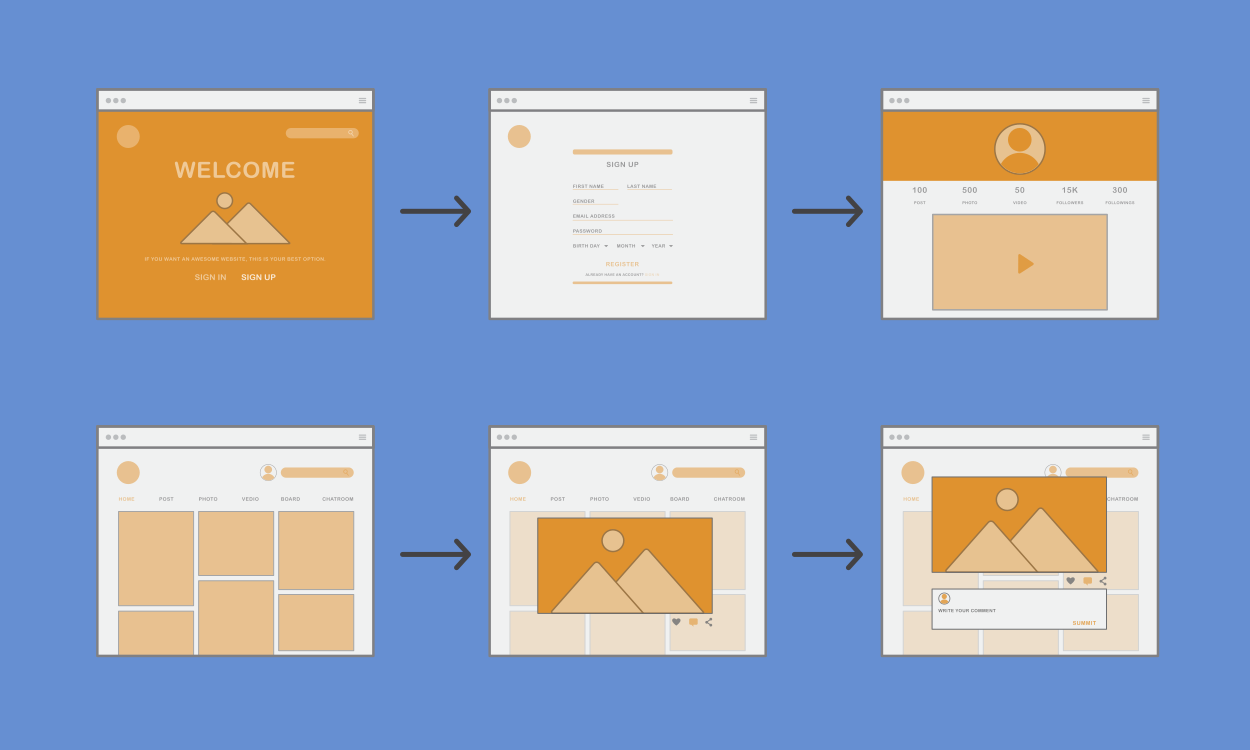
Why Advanced Page Structures Matter
Most websites start simple: a homepage, an about page, maybe a contact page. But as your site grows, that structure quickly becomes limiting.
A well-planned advanced website structure helps you:
- Improve user navigation
- Boost SEO performance
- Highlight important content
- Increase conversions
Instead of treating every page the same, you tailor each subpage to its purpose. That’s where custom layouts shine.
What Is a Custom Page Layout?
A custom page layout means designing each page (or group of pages) differently based on its goal.
For example:
- A service page might focus on benefits and CTAs
- A blog page emphasizes readability and sharing
- A landing page pushes conversions
You’re not locked into a single template, you build strategically.

Real-Life Use Cases for Custom Subpage Layouts
Let’s look at how different pages can benefit from custom layouts.
Service Pages
These need:
- Clear value propositions
- Testimonials
- Strong call-to-action buttons
Blog Pages
Focus on:
- Readability
- Internal linking
- Visual breaks (images, lists, quotes)
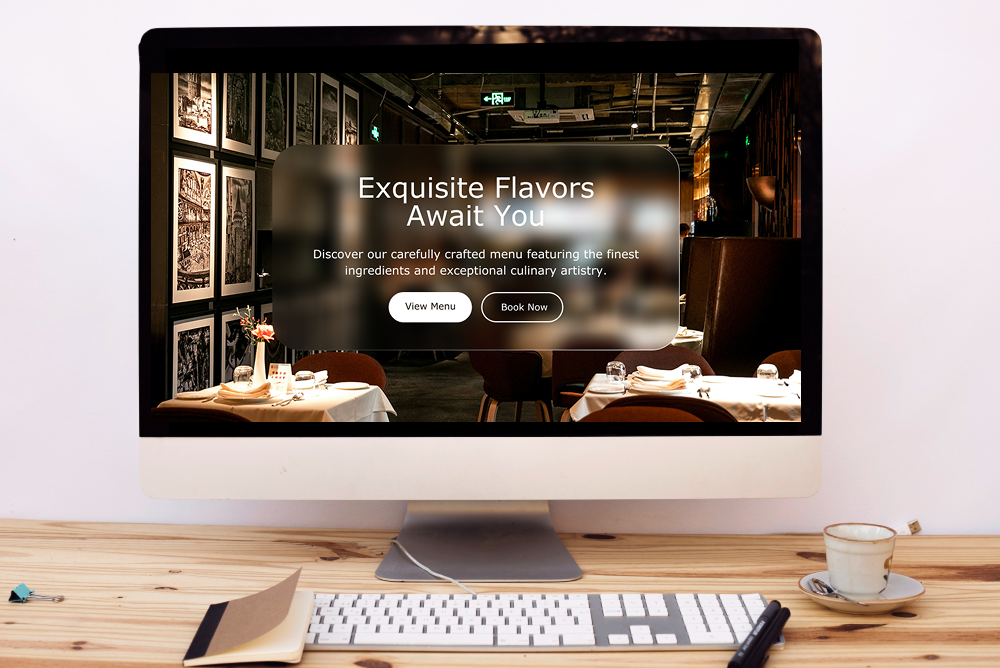

Product Pages
Prioritize:
- Features and benefits
- Pricing clarity
- Trust signals (reviews, guarantees)
Portfolio Pages
Highlight:
- Visual presentation
- Case studies
- Easy navigation between projects
With ME-Page, you can design each of these without needing complex coding.
Key Elements of an Advanced Website Structure
To build effective subpages, you need more than just good design, you need a solid foundation that supports usability, SEO, and scalability.
1. Clear Hierarchy
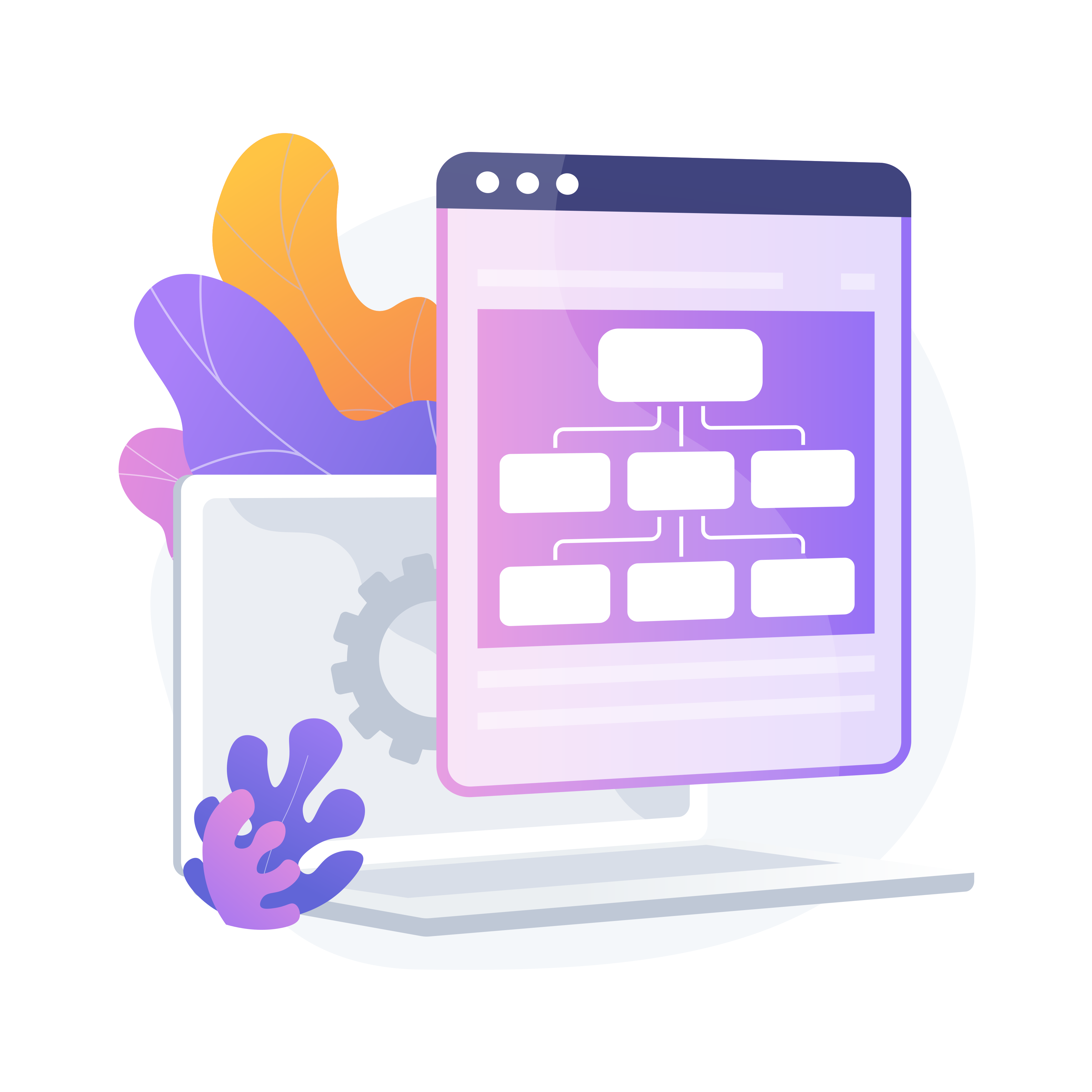
A clear hierarchy organizes your website into logical levels, making it easier for users to navigate. Start with broad categories and gradually narrow down into more specific subpages so visitors always know where they are. This structure also helps search engines understand how your content is related. When your hierarchy is clean, both users and crawlers can move through your site effortlessly.
2. Consistent Navigation
Even when using a custom page layout, your navigation should remain predictable across all pages. Users shouldn’t have to relearn how to move around your site every time they click something new. Keep menus, headers, and key links in familiar positions to build trust and reduce confusion. Consistency improves usability and keeps visitors engaged longer.
3. Internal Linking
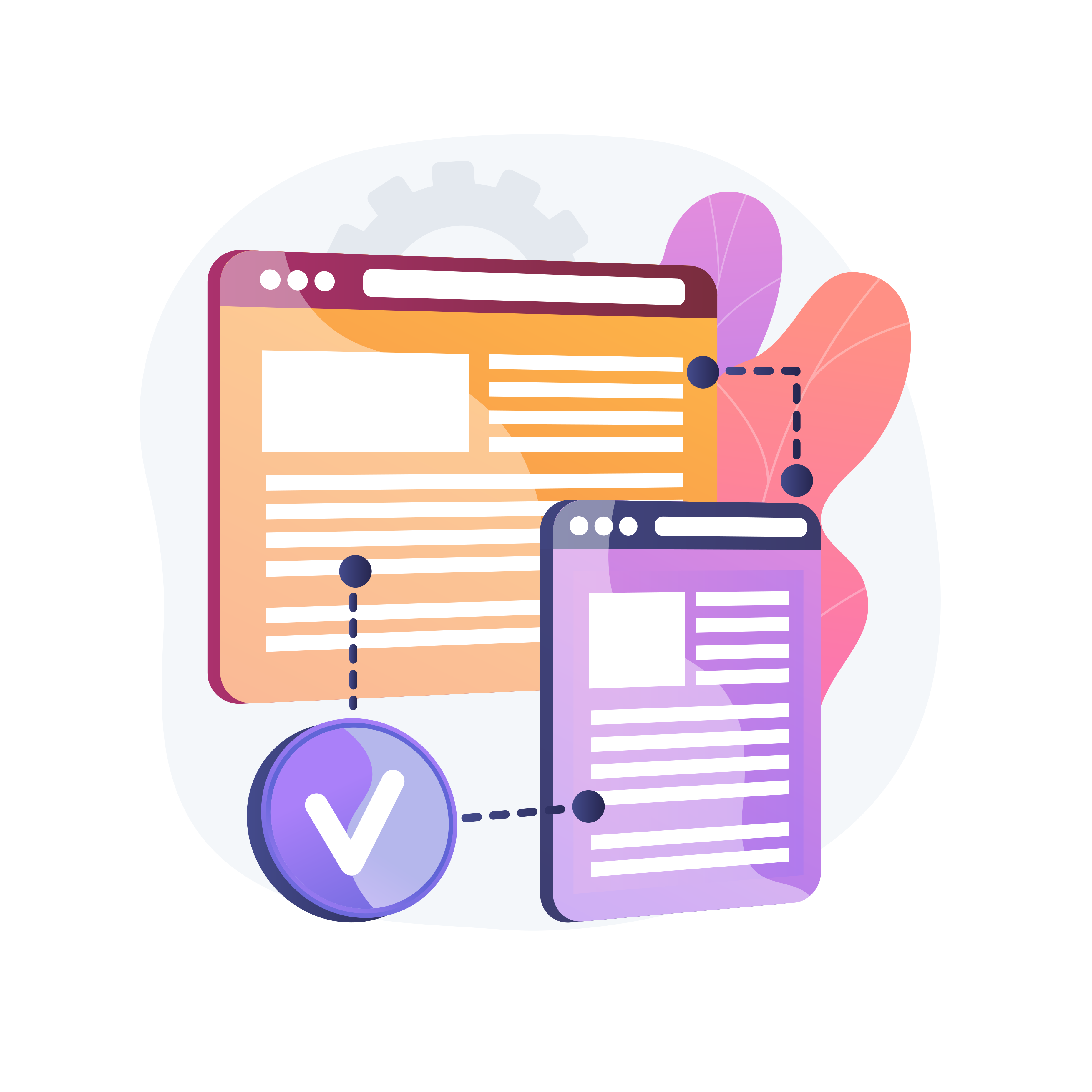
Internal links connect your pages and guide users toward relevant content. They help distribute authority across your site, which strengthens your overall SEO performance. By linking related subpages, you encourage deeper browsing and reduce bounce rates. A strong internal linking strategy is a core part of any advanced website structure.
4. Content Prioritization
Not all content deserves equal attention, so it’s important to highlight what matters most. Use headings, visuals, and layout spacing to draw attention to key information like offers or calls to action. This ensures users quickly find what they’re looking for without feeling overwhelmed. A well-prioritized page keeps visitors focused and improves conversions.
Custom Layout vs Standard Template
Here’s a quick comparison to help you understand the difference:
How ME-Page Simplifies Custom Page Layouts
Creating an advanced website structure might sound technical—but tools like ME-Page make it accessible.
Here’s how it helps:
- Drag-and-Drop Flexibility: You can design layouts visually—no coding required.
- Reusable Sections: Create blocks (like testimonials or CTAs) and reuse them across subpages.
- Responsive Design: Your layouts automatically adjust for mobile and tablet.
- SEO-Friendly Structure: ME-Page allows clean URLs, structured headings, and optimized layouts.
Tips for Designing Better Subpages
If you want your custom page layout to actually work, follow these tips:
- Keep It Purpose-Driven: Every page should have one main goal. Don’t overload it.
- Use Visual Hierarchy: Guide the reader’s eye with headings, spacing, and contrast.
- Break Content into Sections: Nobody likes walls of text, use short paragraphs and lists.
- Add Clear CTAs: Tell users exactly what to do next.
- Test and Improve: Track how users interact and refine your layouts over time.
Common Mistakes to Avoid
Even with the best tools, it’s easy to mess up your structure.
Avoid these:
- Using the same layout for every page
- Ignoring mobile optimization
- Overcomplicating navigation
- Not linking between related pages
- Prioritizing design over usability
A good advanced website structure balances design and function.
Conclusion
Creating a strong advanced website structure isn’t just a “nice-to-have”, it’s essential if you want your site to grow and perform well.
By using a custom page layout, you can tailor each subpage to its specific purpose, improve user experience, and boost your SEO results.
Platforms like ME-Page make this process simple and efficient. You don’t need to be a developer to build smart, flexible layouts, you just need a clear strategy and the right tools.
If you want your website to stand out, engage users, and convert better, investing in custom layouts is one of the smartest moves you can make.
Frequently Asked Questions about Advanced Page Structures
Custom layouts allow you to structure content based on search intent, improving keyword targeting, readability, and internal linking—all of which boost SEO.
Not at all. Even small websites benefit from tailored layouts, especially for service or landing pages.
They can if poorly designed, but platforms like ME-Page optimize performance to keep pages fast and responsive.
Yes. Tools like ME-Page are designed for non-technical users, making it easy to build and manage custom layouts.
Was This Article Helpful?
Click on a star to rate it!
Average Rating: 5/5
Voutes: 1
Share with Friends:



Previous
How Consultants Can Use ME-Page to Generate Leads
Next
From Social Media to Website: A Real ME-Page Use Case
Recent Articles
Everything You Need to Know About Using ME-Page Constructor for Your Website.
Using Multi-Page Navigation to Improve User Experience
As your website grows, visitors need an easy way to move between pages without getting lost. Whether you're bu...

How Internal Links Improve SEO on Multi-Page Websites
When people think about SEO, they often focus on keywords, backlinks, or content creation. While those factors...
How to Choose the Best Homepage Layout for Your Goals
Your homepage is often the first impression visitors have of your brand. Within just a few seconds, people dec...

How to Plan Your Website Before You Start Building
Building a website can feel exciting. You may already be thinking about colors, images, fonts, and clever head...
Using Subpages to Build Service, Pricing, and About Pages
As your website grows, placing all your information on a single page becomes less effective. Visitors want to ...

Why Every Artist Needs a Website Beyond Social Media
For artists, musicians, photographers, illustrators, and other creatives, social media has become an important...
Using Multi-Page Navigation to Improve User Experience
As your website grows, visitors need an easy way to move between pages without getting lost. Whether you're bu...
How Internal Links Improve SEO on Multi-Page Websites
When people think about SEO, they often focus on keywords, backlinks, or content creation. While those factors...
How to Choose the Best Homepage Layout for Your Goals
Your homepage is often the first impression visitors have of your brand. Within just a few seconds, people dec...
How to Plan Your Website Before You Start Building
Building a website can feel exciting. You may already be thinking about colors, images, fonts, and clever head...
Using Subpages to Build Service, Pricing, and About Pages
As your website grows, placing all your information on a single page becomes less effective. Visitors want to ...
Why Every Artist Needs a Website Beyond Social Media
For artists, musicians, photographers, illustrators, and other creatives, social media has become an important...